A cross contamination example in peptide research can begin with something as ordinary as an inadequately cleaned balance spatula. If that tool contacts one lyophilized material, then is reused to weigh a second compound, trace material may transfer between samples. The amount may be small, but the consequence can be significant when a study depends on confirmed compound identity, known concentration, and defensible batch records.
For research teams, cross contamination is not simply a cleanliness issue. It is a data-integrity and traceability issue. It can affect analytical results, confound experimental interpretation, create uncertainty during an investigation, and require repeat work. Preventing it requires controls that begin at procurement and continue through receipt, storage, preparation, analysis, and disposal.
What Cross Contamination Means in a Laboratory
Cross contamination occurs when material from one source is unintentionally introduced into another sample, reagent, work surface, container, instrument, or process. The contaminating material might be a different peptide, residual solvent, microbial material, cleaning-agent residue, particulate matter, or a previously handled reference standard.
The risk is often discussed in relation to sample preparation, but it can arise at several points in the workflow. A mislabeled vial can cause a sample identity mix-up. A shared scoop can create direct physical transfer. An autosampler needle may carry residual analyte from a high-concentration injection into the next sequence. Even a freezer with poorly organized inventory can contribute to handling errors when multiple materials are stored in similar containers.
Not every unexpected analytical result is cross contamination. Degradation, instrument drift, incorrect calculations, and matrix effects can produce similar concerns. That distinction matters. A disciplined investigation should identify the likely failure mode through records, retained samples where available, instrument controls, and appropriate confirmatory analysis rather than assuming a cause.
A Practical Cross Contamination Example
Consider a laboratory preparing two lyophilized research peptides for separate in-vitro studies. Both are stored in labeled vials and handled on the same bench. An analyst uses a spatula to transfer a small amount of the first peptide to a weighing vessel, wipes the spatula with a dry laboratory wipe, and then uses it for the second peptide.
The second sample is later reconstituted and analyzed. Its expected chromatographic profile is broadly present, but an additional small peak appears at a retention time consistent with the first material. A mass spectrometry review may help determine whether that peak is consistent with carryover from the first peptide, though method sensitivity, ionization behavior, and the availability of a reference material will affect what can be concluded.
This cross contamination example illustrates two points. First, a visually clean tool is not necessarily analytically clean. Second, a weak control at the preparation stage can create downstream uncertainty that consumes far more time than using dedicated or properly cleaned tools at the outset.
A different version of the same problem can occur during liquid handling. A pipette tip contacts a concentrated stock solution, then the operator inadvertently reuses the tip in a second container. In this case, contamination may be more substantial than the residue left on a dry tool. The appropriate control depends on the procedure, the concentration range, the analytical sensitivity required, and the consequences of a false result.
Where Peptide Research Workflows Are Most Exposed
Cross contamination risk is highest where materials, equipment, or personnel move between samples without a defined separation or cleaning step. Common exposure points include receipt and aliquoting, weighing, reconstitution, chromatographic analysis, shared cold storage, and waste handling.
At receipt, external packaging, vial labels, and accompanying documentation should be checked against the purchase record before materials enter active inventory. Similar names, similar vial formats, and handwritten labels increase the chance of an identity error. A clear internal material ID linked to the supplier batch and Certificate of Analysis provides a stronger chain of traceability.
During reconstitution, the diluent itself must be suitable for the documented research procedure. Use appropriately labeled, controlled laboratory reagents and record the lot where required by the protocol. Bacteriostatic water and other supporting materials should be handled as laboratory supplies under the same controls as the compound. They are not interchangeable with unverified liquids or reused containers.
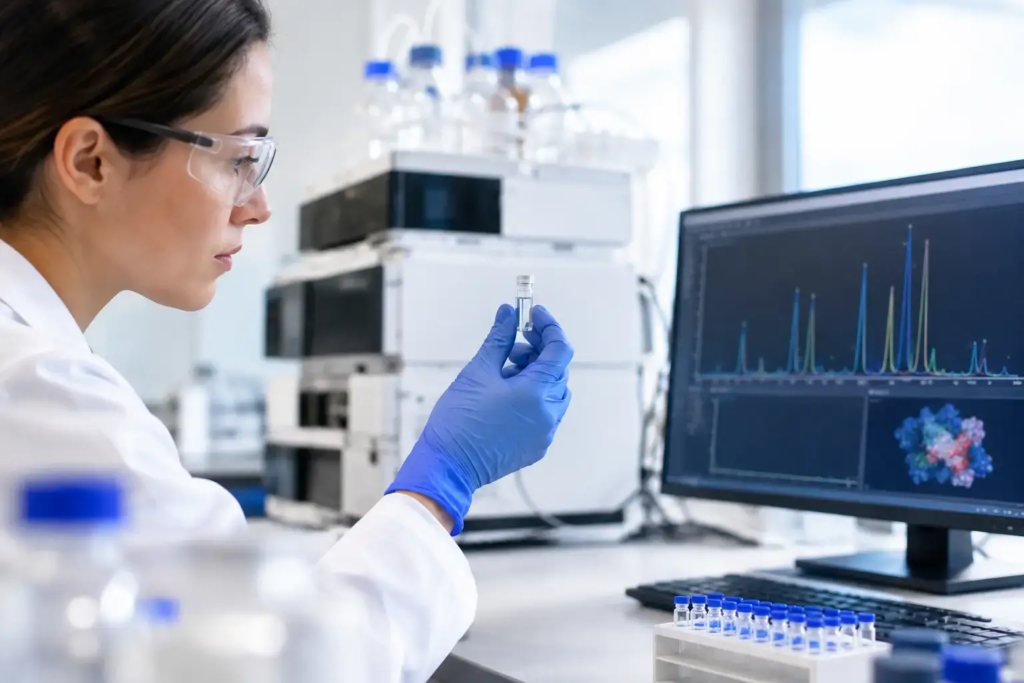
Analytical systems require particular attention. HPLC carryover can occur when residual analyte remains in the injection pathway, needle seat, tubing, or column environment after a prior sample. A blank injection placed after a high-concentration sample can reveal whether the system is adequately cleared under the method conditions. Where carryover is observed, the response may involve additional wash steps, adjusted sequence design, cleaning procedures, or maintenance. It depends on the method and instrument configuration.
Controls That Reduce Contamination Risk
The strongest approach is a documented workflow that makes the correct action easier than the incorrect one. Segregate materials by project, compound class, or status where practical. Use dedicated or disposable tools for open-vial handling, and clean work surfaces before and after each activity using procedures compatible with the materials being handled.
For recurring work, establish a written sequence: verify material identity, prepare one compound at a time, use fresh consumables, close containers promptly, document each transfer, and return materials to designated storage. This is less about adding bureaucracy and more about preserving the information needed to trust a result later.
Four controls are especially useful in most peptide research environments:
- Use clear labels that connect the internal sample ID, supplier batch, receipt date, storage condition, and preparer.
- Keep single-use pipette tips, clean weighing vessels, and dedicated spatulas available at the point of use.
- Separate high-concentration standards or stock solutions from lower-level working samples whenever the workflow allows.
- Include procedural blanks and, when appropriate, system-suitability or carryover checks in analytical sequences.
These measures should be proportionate to the work. A preliminary handling exercise does not need the same controls as a quantitative study supporting a regulated development program. Still, basic identity verification, clean handling, and complete records are reasonable safeguards in nearly every laboratory setting.
Documentation Is Part of Contamination Control
When an unexpected peak or result appears, the laboratory needs more than a recollection of what happened. It needs a record. Batch documentation, receipt logs, preparation worksheets, instrument sequences, cleaning records, and sample storage history can narrow an investigation quickly.
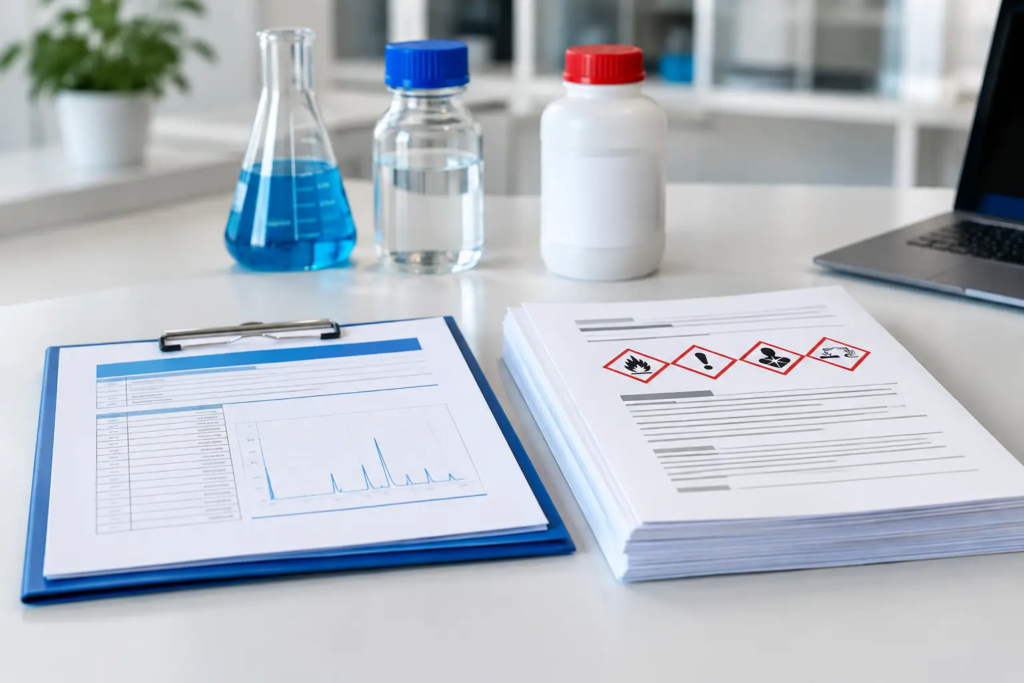
Supplier documentation also supports the starting point for that record. A product-specific COA, HPLC information, mass spectrometry verification, and impurity profile can establish what was reported for the material before it entered the laboratory. These documents do not eliminate the need for incoming controls or fit-for-purpose verification, but they provide essential context when reviewing an anomalous result.
At SKO Compounds, research materials are sold strictly for laboratory research use only and supported by batch-specific documentation. That documentation should be incorporated into the laboratory's own material-control process, not treated as a substitute for sound handling practices after delivery.
How to Respond When Contamination Is Suspected
Do not discard the evidence immediately. Secure the affected samples, label their status clearly, and prevent further use pending review. Preserve the relevant raw data, sequence files, worksheets, and associated reagent records. If feasible, inspect retained material and run appropriate blanks or confirmatory testing under a documented plan.
The investigation should consider plausible alternatives. Was there a sample preparation error? Is the unexpected signal present in a blank? Did a prior high-level injection create instrument carryover? Does the observed mass and retention behavior support a specific contaminant? Was the original material stored under its required conditions? A conclusion is stronger when it is supported by evidence rather than a single observation.
Corrective action should address the source, not just the immediate sample. Replacing a contaminated vial without changing the handling process leaves the same risk in place. A revised cleaning step, better material segregation, improved label design, or adjusted HPLC wash protocol may be the more durable correction.
Reliable peptide research depends on knowing what entered the experiment and what did not. Clean technique, verified starting materials, and records that withstand review give researchers a practical basis for trusting the next result.