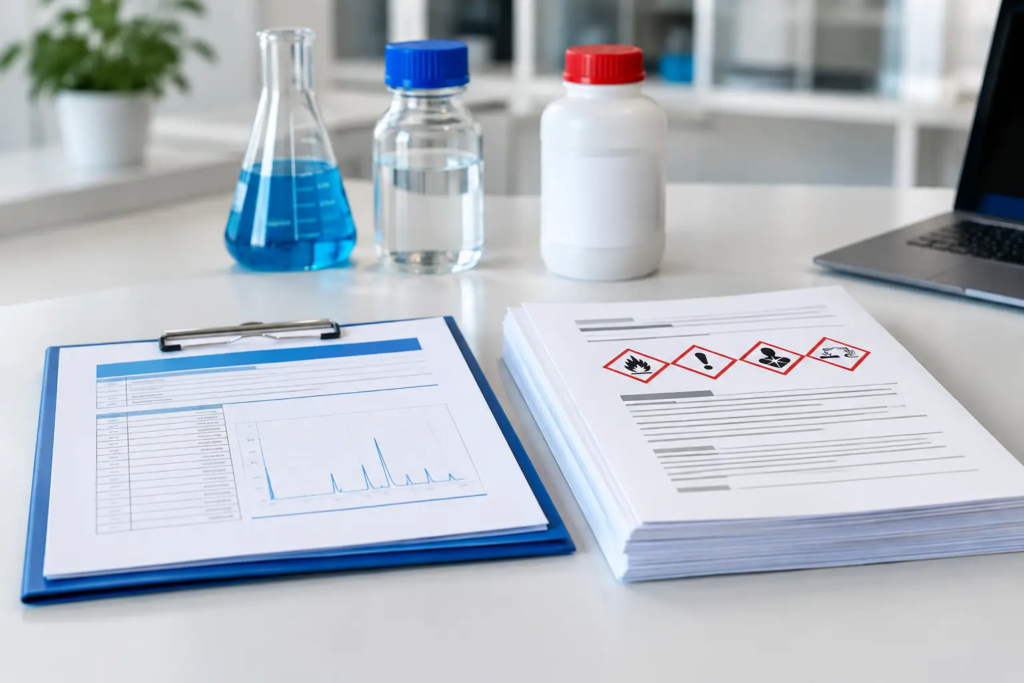
A freezer can hold months or years of research value, yet many inventory failures begin with a small omission: an unlabeled vial, a changed box position, or material returned to the wrong shelf after a run. Knowing how to manage freezer inventory means creating a system that preserves identity, condition, location, and documentation from receipt through final disposition. For laboratories handling research peptides, reference materials, reagents, and other temperature-sensitive compounds, that system is part of quality control.
Inventory management is not merely a count of what is on hand. A useful record answers four operational questions quickly: What is the material? Which documented batch is it? Where is it located? Is it still suitable for the intended research workflow? If one of those answers is uncertain, the material should be treated as unavailable until the record is reconciled.
Build the freezer inventory around traceability
Start with a unique identifier for every received item. This identifier should connect the physical container to the purchase record, supplier documentation, Certificate of Analysis, lot or batch number, receipt date, and stated storage requirements. A supplier lot number alone is valuable, but it may not distinguish between multiple containers received from the same lot at different times or assigned to different projects.
Use a laboratory-specific ID in addition to the manufacturer or supplier identifier. For example, an internal format may include the material class, receipt year, sequential number, and container number. The format matters less than consistency. The same ID should appear on the vial or outer container, the inventory record, and any aliquot or derivative record created later.
For documented research compounds, retain the associated analytical package with the inventory entry. This may include the COA, HPLC chromatogram or purity result, mass spectrometry verification, impurity profile, and handling documentation supplied for that batch. Separating a container from its records creates unnecessary ambiguity, particularly when similar materials are stored in the same unit.
Record the details that support a decision
A practical freezer record should include the material name, internal ID, supplier, supplier lot number, quantity, unit size, concentration where applicable, received date, storage condition, expiration or retest date when provided, and the exact freezer location. It should also identify the responsible project or owner and link to the relevant quality documents.
For lyophilized research peptides, record whether the material remains unopened, has been reconstituted for a defined laboratory procedure, or has been divided into aliquots. These states are not interchangeable. Reconstitution details, diluent identity, preparation date, handler, and assigned storage condition should be recorded according to the laboratory's approved procedures. Research materials should be handled only within their documented specifications and institutional controls.
Avoid vague location fields such as “main freezer” or “bottom shelf.” A usable location follows a hierarchy: unit, compartment or door, shelf, rack, box, and box position. A record that says “Freezer 2, Rack C, Box 4, C6” allows a trained staff member to retrieve or verify a vial without searching through unrelated material.
Standardize labels before materials enter storage
Freezer labels must remain readable under low temperatures, handling, and condensation. Labels that curl, smear, or detach create a predictable traceability problem. Use freezer-rated labels and ink, then validate that the chosen label format fits the smallest container routinely used in the laboratory.
At minimum, the physical label should show the internal ID, material name or approved abbreviation, concentration or amount when relevant, date, and storage condition. Add the supplier lot number when space allows. A barcode or QR code can improve speed and reduce transcription errors, but it should supplement, not replace, human-readable identification. If scanner access fails during an audit or equipment incident, staff must still be able to identify the container.
Aliquots require their own labels and parent-child relationship in the inventory system. Do not label several tubes only with a project nickname or an informal abbreviation understood by one researcher. That shortcut may be convenient during a busy day, but it leaves the laboratory unable to confirm identity later.
How to manage freezer inventory by location and access
A freezer map turns storage space into a controlled resource. Assign each shelf, rack, and box a fixed designation, and maintain the same arrangement across the inventory record, box map, and physical unit. Materials that are frequently accessed should be located where retrieval is quick and where their removal does not require prolonged door-open time.
Organize materials by a method that fits the work. Some laboratories group by project, others by material type, hazard classification, or storage requirement. There is no universal layout. The better choice is the one that reduces retrieval time while preventing confusion between similar containers. High-value or limited-quantity materials may warrant restricted-access boxes or a separate controlled section.
Do not overfill racks or boxes. Crowded storage causes containers to be misplaced, labels to be obscured, and doors to remain open longer during searches. It also makes a temperature excursion more difficult to investigate because staff cannot quickly determine which material was exposed. Leave sufficient room for orderly retrieval and plan capacity before the freezer reaches its practical limit.
Access control should match the material and the laboratory's records requirements. If multiple teams use one freezer, designate who can add material, change a location, remove inventory, and dispose of material. A system with no ownership often becomes a system where everyone assumes someone else updated the record.
Treat temperature monitoring as an inventory control
Temperature monitoring is not separate from freezer inventory management. A location record has limited value if the laboratory cannot establish whether the storage environment remained within the required range.
Use a calibrated or otherwise qualified monitoring approach appropriate for the unit and risk level. Document setpoints, actual temperature records, alarm limits, alarm contacts, maintenance, and calibration or verification activities. Continuous monitoring with documented review is generally more informative than occasional manual checks, especially for critical materials. The appropriate control depends on the freezer type, storage requirement, material value, and institutional quality system.
Establish a written response plan for alarms and excursions before an event occurs. The plan should identify backup storage, responsible personnel, transfer priorities, documentation requirements, and the process for evaluating affected materials. Do not make suitability decisions based only on whether material still appears frozen. Review the excursion duration, recorded temperatures, container condition, manufacturer or supplier guidance, and internal procedures.
A backup freezer is useful only if it has available, mapped space and can be accessed promptly. Periodically verify both conditions. During an outage, an unorganized backup unit can turn an equipment problem into a chain-of-custody problem.
Reconcile inventory on a defined schedule
Digital inventory software can improve searchability, user permissions, audit trails, and barcode workflows. A spreadsheet can also work for a small, disciplined laboratory. The limiting factor is not the platform. It is whether every movement is recorded at the time it occurs and whether the physical inventory is checked against the record.
Set a reconciliation frequency based on turnover and risk. Fast-moving boxes may require a review after each use or weekly. Stable, sealed inventory may be suitable for monthly or quarterly verification. At each review, confirm location, container count, label legibility, condition, and document availability. Investigate discrepancies immediately rather than carrying them into the next audit.
A complete reconciliation process should also identify expired, depleted, damaged, unknown, or duplicate materials. Segregate material with uncertain identity or status from active inventory and mark it clearly as pending review. Never return an unidentified vial to general stock simply because it is likely to be correct.
Use a short check-out process
When material leaves a freezer, capture the date, user, amount removed, intended project, and remaining quantity when feasible. For shared materials, this record prevents false stock counts and makes unusually high consumption visible. If a container is moved to another unit, update the location before or at the time of transfer, not at the end of the week.
For materials with supporting batch documentation, preserve the link between the withdrawn portion and the source batch. This matters when a project record, result review, or quality question requires retrospective traceability.
Build disposal and retention into the workflow
Inventory ends with documented disposition. Record when a container is consumed, transferred, returned to a supplier where applicable, or disposed of under the laboratory's approved chemical waste procedures. Keeping empty or obsolete entries active inflates available stock and obscures what the laboratory can actually use.
Retain quality records according to institutional, project, and applicable regulatory requirements. For research-use-only compounds, clear documentation supports proper laboratory handling and procurement review without implying any human, veterinary, diagnostic, therapeutic, injection, ingestion, or consumption use.
A well-run freezer should let a researcher locate a documented material quickly, verify its batch and status, and return it without disturbing the rest of the unit. That standard is practical, measurable, and worth maintaining one vial at a time.